- ai-site-generation
- deepseek
Name.am AI website builder: 1,000+ sites generated
Discuss a full-time role1,000+ sites generated, 40% less build time
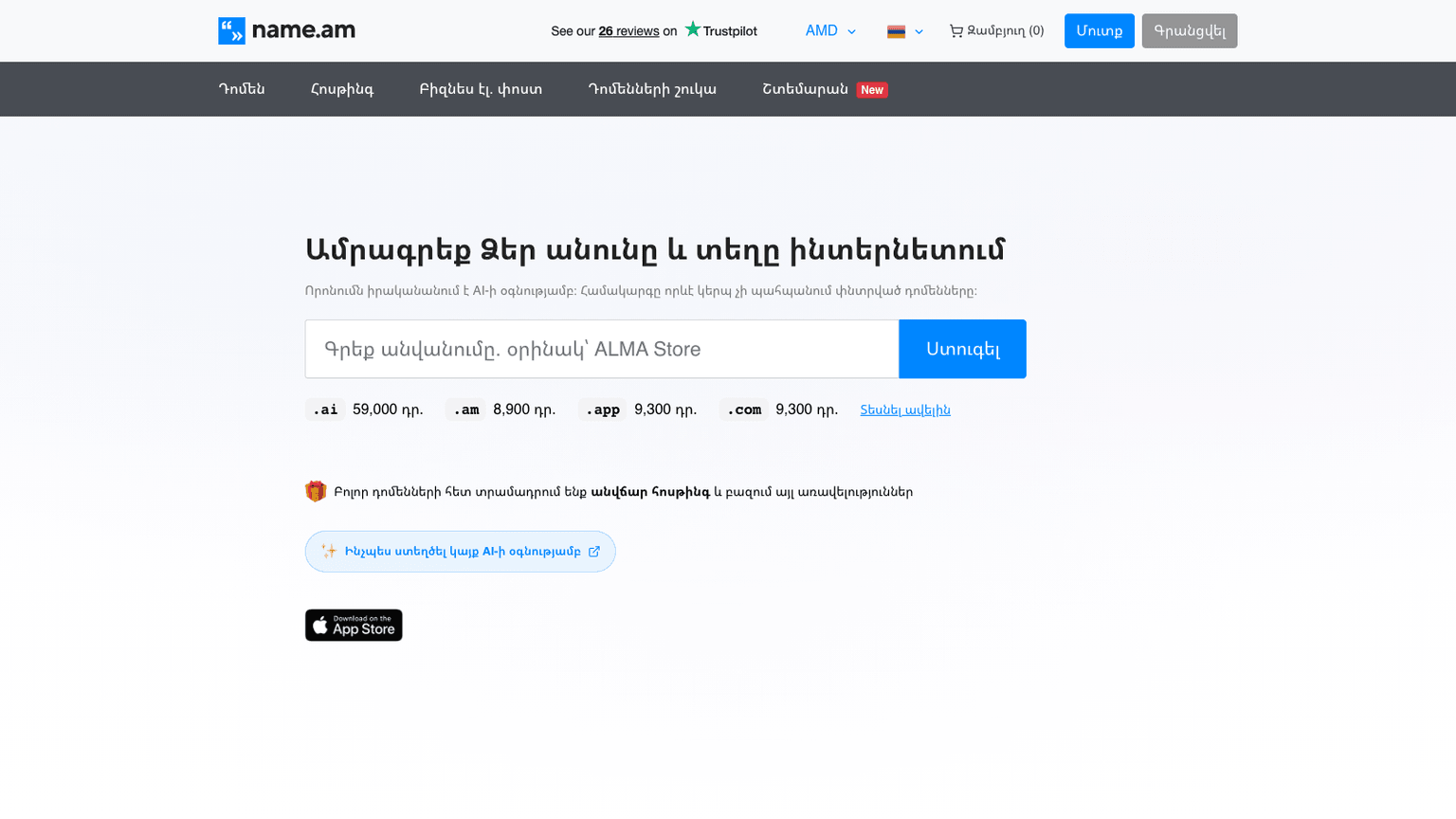
Name.am sells domains and runs a domain marketplace. Its AI website builder takes a text prompt describing a business and generates a site from it, and I led that build from January to May 2025 as lead full-stack and AI engineer. Name.am's figures for the builder: 1,000+ sites generated and 40% less build time.
The goal: a site written by the model
A customer describes the business. A language model writes the site. That is the whole product bet, and it only pays off if the output is consistent enough to hand to a paying customer and fast enough that they stay on the page while it happens.
What the build had to fit around
Five months, January to May 2025, and one person leading both halves of the work: the model integration and the interface a customer looks at while the model runs.
The platform was not new to me. I had worked on it from March 2023 to August 2024 as UI engineer and growth consultant, so the builder went into a product that already had monthly active users and a redesign behind it.
What I built
Generation runs on DeepSeek's API. DeepSeek supplies the large language model that writes the site's copy and structure.
The output streams to the browser as it is written. Server-Sent Events is a one-way channel that pushes text from the server to the page as it arrives. Generating a whole site takes seconds rather than milliseconds, and a still screen for that long reads as a failure. With the stream, the customer watches sections appear.
The prompt is a set of parts. Instead of one long instruction, generation composes from separate prompt units, each responsible for a slice of the output. That is what makes the system safe to change: I could rework how one section is produced without reopening the rest.
What it came out at
1,000+ sites were generated, and build time came down 40%. Both figures are Name.am's own, covering the build phase I led from January to May 2025.
One caveat I would rather state than hide. What the build-time clock started and stopped on is not written down anywhere I can point a reader to, so read the 40% as the company's measure of its own flow. I did not instrument it.
The two years before the builder
I worked on Name.am once before, from March 2023 to August 2024, as UI engineer and growth consultant. Search work over that period lifted monthly active users 15%.
The redesign moved two figures on the company's site analytics: visitors who stayed and bought went up 25%, and spend per remaining customer went up 30%.
I also built the domain-suggestion feature on OpenAI's API and ran A/B tests on the funnel. The parking page does two jobs for the business, bringing in new customers and selling domains through the marketplace. I have no measured number for the parking page.
Stack
DeepSeek's API for generation, Server-Sent Events for the stream to the browser, and a prompt system split into separate units. The earlier work on the platform was React, with OpenAI's API behind the domain suggestions.
Discuss an AI product build